Posts Tagged ‘travel’

Events for Lincoln Highway Around Chicago book

April 2, 2008

With some big projects keeping me busy, I’ve not been able yet to review Cynthia Ogorek’s new book from Arcadia, The Lincoln Highway Around Chicago, but here’s a list of book-related events to look for over the next few months.
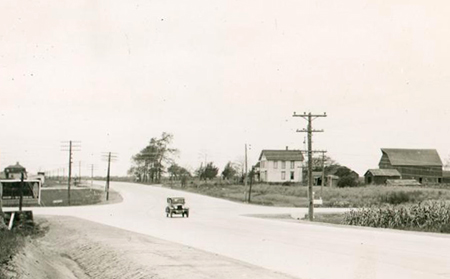
IN_LHA_lhc1321.jpg

Above, the LHA labeled this 1927 photo as “an important intersection with the pavement widened for safety, 25 miles west of Chicago Heights, Illinois. Courtesy University of Michigan, Special Collections Library, lhc1321.

April
7 at 10 am. “The Dave Nemo Show,” XM Satellite Radio, Open Road 171. Live phone interview.

14 at 7 pm. South Holland Public Library, 16250 Wausau Ave, South Holland, IL, (708) 331-5262. Program and book signing.

19 at 10:30 am. South Suburban Heritage Association Annual Conference, St. Paul Community Church, 18200 Dixie Hwy, Homewood, IL, jryegdorf@ameritech.net


May
10 at 11:30 am. Indiana-Lincoln Highway Association Spring Meeting and Luncheon, Teibel’s Restaurant, Schererville, IN. Contact: in.director@lincolnhighwayassoc.org

17 All day. South Holland “Onion Fest,” American Legion Hall, 443 157th St, South Holland, IL, (708) 596-2722.


June
7 or 8 time TBA. Printers’ Row Book Fair, Chicago, IL, at Arcadia Publishing booth. Contact Cynthia at sealuna@juno.com

13 at 1 p.m. Calumet City Historical Society, 760 Wentworth Ave, Calumet City, IL, (708) 862-8662.


July
12th at 1 pm. Lake County Public Library, Merrillville, IN. Contact Susan Killin (219) 7769-3541 x336 or skillin@lakeco.lib.in.us


August
TBA Gourmet Junction, Plainfield, IL. Contact Cynthia at sealuna@juno.com


September
16 time and place TBA. South Holland Historical Society, South Holland, IL, (708) 596-2722.

Contact names and emails are supplied if you’d like to confirm the arrangements.

NYC's vintage Cheyenne Diner closing

April 1, 2008

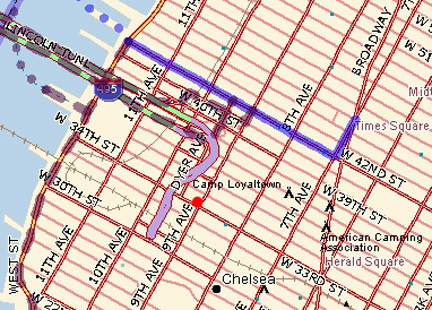
Yet another diner in New York City is closing, leaving few of the classic stainless steel diners that were once so common in Manhattan. An article in the New York Daily News states that the Cheyenee Diner, 33rd Street at 9th Avenue near Penn Station, is on land leased from a nearby diner owner who has decided building apartments is better than leasing to a competitor. Though 9 blocks south of the original Lincoln Highway / 42nd Street, the Cheyenne was the last old-time, factory-built diner near the cross-country route. Its last day is this Sunday. UPDATE: Now closed, this article says it’s for sale for $7,900.

NY_Chey_Triborough.jpg

Spiros Kasimis, 44, is only the third owner, having had it 18 years. He says the diner was doing well and that people still prefer burgers and bacon over healthy fare, but couldn’t compete with spiraling real estate values:

“The day of one-story structures in Manhattan is over,” he said, adding that he’s looking for a new location in the Hell’s Kitchen-Chelsea area.

Originally called the Market Diner, the 1946 Paramount-brand eatery features neon on the outside and Native American artifacts on interior walls. Another article from am New York debates if the structure can be moved. It’s popular with locals who lament the increasing replacement of community gatherings spots with more commercial uses.

NY_Chey_Goggla.jpg

NY_NYC_CheyMap.jpg

The above photos are courtesy Flickr blog feature. Click on each image for the original post. Map (blue line is original LH, red dot is diner) from the LHA Driving Maps, available from the Lincoln Highway Trading Post.

New Chicago Lincoln Hwy book gets local review

March 17, 2008

I received an advance copy a couple weeks ago of The Lincoln Highway Around Chicago by Cynthia L. Ogorek and have been enjoying it. A full review will run here shortly, but till then, you can read what the The Times of Munster, Indiana, says about it here.

IN_UM_lhc2719.jpg

Above is a photo from the book showing one of two streams that were crossed by the Ideal Section, a 1.3-mile “model” stretch of the Lincoln Highway between Schererville and Dyer, Indiana. A man crossing a temporary bridge at far right gives scale to the enormity of the job. Click HERE to enjoy a hi-res version. Courtesy University of Michigan, Special Collections Library, lhc2719.

Will the Crosser Diner ever reopen in Lisbon, OH?

March 11, 2008

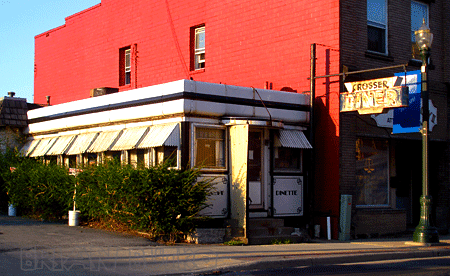
A bit of warm weather has me thinking “road trip,” through cold weather admittedly has the same effect. Looking through last summer’s photos, one of the best treats along the Lincoln Highway is traveling eastward across Ohio in the evening and arriving in Lisbon after dark. No matter the hour, the corner entrance of the Steel Trolley Diner beckons with neon, stainless, and a warm glow inside — not to mention pies, home fries, coffee, and milk shakes. But for at least 6 years, the other side of town had brought a frown when I pass the abandoned Crosser Diner. It’s a c. 1944 Sterling diner made by J.B. Judkins of Merrimac, Mass., best known for their streamliner models featuring one or both ends rounded. This is a Dinette model, one of only 4 survivors.

OH_Crosser D
Above: Waiting for customers, and a buyer, is the rare Crosser Diner in Lisbon, Ohio.

The diner (127 W. Lincoln Way) and adjacent service station were founded by Jimmy Hanna and later run by John Howard “Wimpy” Crosser and his wife Lorena Arter. It changed hands and struggled in recent decades due to its tiny size and having the main storage and kitchen downstairs, but it still featured solid diner fare and classic decor. One site reports a rumor of it moving but I’ve not seen confirmation or an update. It’s a treasure worth saving and reopening, with a cool little neon sign to match. Any diner fans or Ohio LH roadies know its status?

Alice Ramsey book recounts, retraces 1909 trip

March 10, 2008

We’ve mentioned the recreation of Alice Ramsey’s cross country trip set for 2009, but readers can relive the original journey courtesy of author and researcher Gregory Franzwa. Alice recounted her adventures 54 years after her 1909 trip in Veil, Duster, and Tire Iron—problem is, it’s extremely hard to find a copy of that book. Franzwa has not only republished the original text but done us all the favor of unearthing where her travels literally took her, from roads to hotels to restaurants. Much of her route (well, west of Ligonier, Indiana) would become the Lincoln Highway four years later.

FranzwaAliceBook

Alice Ramsey’s story was once well-known: on June 9, 1909, she and three female companions set off from NYC in a new, dark green Maxwell DA. She reached the Pacific 59 days later, becoming the first woman to drive coast-to-coast. The text and illustrations from her 1963 book are here along with 108 new endnotes that add lots of info as to the route and stops.

But the endnotes, following each chapter, are just part of the amazing supplemental material that’s been added. Almost half of Franzwa’s book consists of Chasing Alice, a conversational guide retracing the author’s research journeys. Filled with vintage ads, photos, and modern maps and pictures, the reader tags along as Franzwa tries to find remnants of the original trip. Along the way, fellow researchers, librarians, web sites, and friends help out, like Van and Bev Becker, who combed Mechanicsville, Iowa, for clues to Alice’s overnight stop there. Not only did they locate the buildings that housed the hotel, the livery stable, and the restaurant, but they dug up the hotel’s gold-embossed registers listing the four women travelers, their rooms, and even the time of their wake-up call!

The book ends with a preview of the work being done by Richard Anderson to rebuild a 1909 Maxwell DA and recreate the trip on its centennial. All parts of the book will have you yearning for the open road.

Alice’s Drive: Republishing Veil, Duster, and Tire Iron
by Alice Ramsey, Annotation and “Chasing Alice” by Gregory M. Franzwa
Patrice Press, 265 pp, 161 illustrations, 108 notes, index, softcover
ISBN 1-880397-56-0

$19.95 plus $4.95 s/h direct from Franzwa’s Patrice Press or contact Amazon sellers.

1915 article leads to LH routing mystery

March 7, 2008

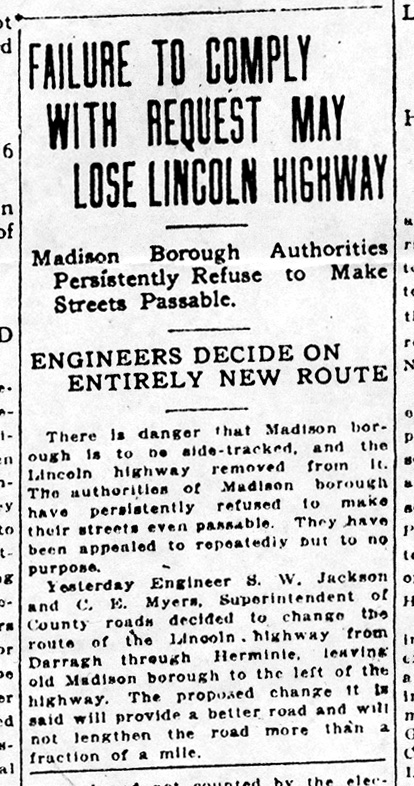
Jim Steeley, of the Westmoreland County Historical Society and a LH researcher, came across a Lincoln Highway item in the September 30, 1915, Greensburg Daily Tribune, about rerouting the LH away from Madison, Pennsylvania. Problem is, the LH never went through Madison!

PA_HerminieArticle.jpg

The article “Failure To Comply With Request May Lose Lincoln Highway” appeared on the front page of the paper describing Madison Borough’s refusal to improve its streets, therefore endangering the borough “to be side-tracked, and the Lincoln Highway removed from it.” It cited an engineer and a superintendent of county roads who “decided to change the route of the Lincoln Highway from Darragh through Herminie, leaving old Madison Borough to the left of the highway.” It would “not lengthen the road more than a fraction of a mile.”

PA_HerminieMap.jpg

But the Lincoln Highway is not known to have gone anywhere near Madison, let alone through it. To follow this route, Jim explains, the Lincoln Highway would have run through Greensburg to West Pittsburgh Street where it intersects with West Newton Street and hence to the West Newton Road (Rt 136) through Darragh, o to Madison (until it was bypassed) and Herminie, then north on Clay Pike through Rillton to Circleville at the top of Jacktown Hill, where it would join present-day US 30 west of Irwin. The map above shows the commonly known LH in red, the implied route in blue, and the topic of the article (routing through Madison) in green.

The first official LH road guide, published spring 1915, lists Greensburg followed (heading west) by Grapeville, Adamsburg, and Irwin—all along the red-marked route, similar to today’s US 30. Why, a half-year after the 1915 guide was published, was it believed that these towns were on the Lincoln Highway?

Mystery photos 4 & 5: NE and WY

February 29, 2008

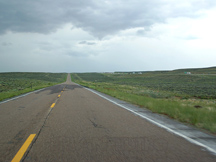
Daily snow the past few weeks has us dreaming of sunny drives along the Lincoln Highway, so here are a couple summertime photos from western Nebraska and western Wyoming. Can you correctly identify either location?

NE_46_sm.jpg

WY_0046_sm.jpg

To see them larger, click on each one for a connection to Flickr. Once there, click “All Sizes” above the each image to see them even larger.

Proclamations honor LH's favorite Boy Scout

February 22, 2008

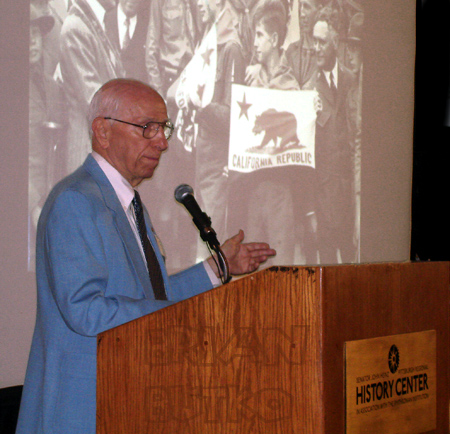
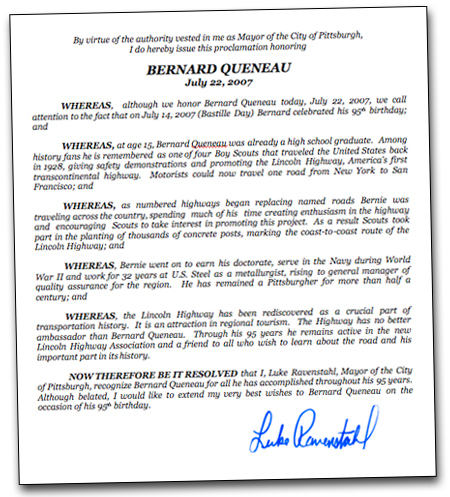
One of the highlights of the Summertime Fun event I arranged last year at the Senator John Heinz History Center was to award Bernie Queneau with a proclamation from the mayor of Pittsburgh. It mentions not only Bernie’s participation in the cross-country safety demonstration tour along the Lincoln Highway in 1928, but also his earning a doctorate, service with the Navy in WWII, and his expertise in metallurgy. He also received a proclamation from the LHA, presented by Rev. John Harman. The occasion for all this was his 95th birthday on July 14 – Bastille Day, Bernie likes to remind us! Also attending was his wife, LHA past president Esther M. Queneau.

Bernie Queneau 7/07
Above: Bernie in front of a photo of himself holding a CA flag at the end of the LH, 1928.

Recently, mayor Luke Ravenstahl hosted a ceremony for some of the proclamation recipients, including Bernie. Here’s part of the mayor’s intro to the recent event:

For many years, Pittsburgh Mayors have been recognizing outstanding citizens and organizations by issuing them proclamations.

It is my goal to highlights some of our most unique Pittsburgh citizens and organizations, by presenting their proclamation in person.

It gives me great pleasure to be familiar with all of the important activities Pittsburghers are involved with.

I say it all of the time, but I truly believe that Pittsburgh is America’s most livable City because of its people.

We are people of superb nature, who will always reach out a hand to help others—we are Pittsburgh proud.

Today, I have looked through a number of recently issued proclamations, and it is my pleasure to meet those outstanding individuals, and personally present them with their proclamation.

QueneauProc

You can see a video of Proclamation Thursday on the City of Pittsburgh’s Cable Station, channel 13, at 3:00 a.m., 8:30 a.m., 12:30 p.m. and 9:30 p.m. through February and March.

Lincoln Memorial: monument was almost a road

February 20, 2008

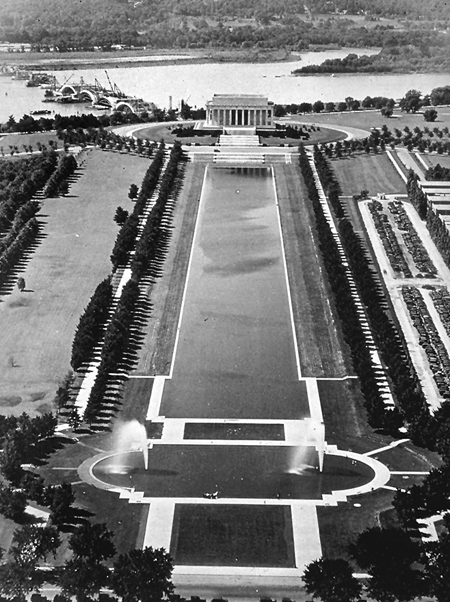
A detailed and engrossing story in The Washington Post recalls the tumultuous genesis of the Lincoln Memorial, including how the monument that we know was instead almost a road named for the President. It was referred to then as the Lincoln highway, the Lincoln Memorial Highway, or simply Lincoln Way – all years before the Lincoln Highway of this blog was proposed or its association incorporated in 1913. The article is titled, “The Lincoln Conspirator: Illinois Congressman Joe Cannon was determined to stop the Lincoln Memorial from rising on the Mall. He almost succeeded.”

LOC_Lincoln Memorial

Above: An aerial view of the Lincoln Memorial, with Memorial Bridge under construction, c. 1930, courtesy LOC, Images of America: Lantern Slide Collection, from the Harvard University Graduate School of Design, Frances Loeb Library, Cambridge Mass.

A national monument to honor Lincoln in Washington, D.C., was proposed soon after his assassination, but the idea foundered until 1901 when the Senate Park Commission proposed the current monument as part of a plan to remake the Mall.

Here are excerpts that mention the idea of a highway:

What had most impressed [former congressman James] McCleary during his tour of Europe was the Appian Way, the ancient road in southern Italy built by Roman censor Appius Claudius. “Who has not heard of the Appian Way?” he wrote in the article. “What a fitting memorial to Lincoln would be a noble highway, a splendid boulevard, from the White House to Gettysburg.”

“The Lincoln Way” would include one roadway for automobiles and one for horse-drawn carriages and wagons; plus two electric railway tracks: one for express trains, the other for local trains. Stately rows of trees would border the highway. Down the middle would be a well-kept lawn 40 to 50 feet wide, with beautiful fountains and monuments at intervals along the way. Given “the possibilities of electrical illumination, the beauty of this boulevard when lit up at night may be left to the imagination,” McCleary wrote….

Rep. William Borland, the Missouri congressman who led the highway effort, predicted an easy win for the road. He believed cars would become more popular, though he didn’t drive one himself. Many congressmen found the prospect of obtaining federal dollars for road projects in their own districts tempting. Road supporters, backed by the auto industry, were well-organized. They flooded Congress with telegrams and petitions. Architect Glenn Brown’s campaign in favor of a Greek temple was no match. Everyone knew that a House victory for the Lincoln highway would create a stalemate and indefinitely postpone the creation of any memorial because the Senate wouldn’t agree to the road….

Highway advocates attacked the memorial plan as foreign and not representative of Lincoln, according to the Congressional Record. “There is nothing in this Greek temple . . . that even suggests . . . the character . . . of Abraham Lincoln,” said Rep. Isaac Sherwood of Ohio….

A highway is “nearer to expressing the epoch of American history than any other form of memorial,” said Borland, who emphasized that a road was unanimously endorsed by the Grand Army of the Republic, whose members were Union veterans. The Greek temple is the most hackneyed form of architecture known, he added…

Knowing that aesthetic arguments weren’t likely to sway members, [architect] Brown had prepared a cost estimate for the Lincoln highway, which Rep. Lynden Evans of Illinois used effectively during the debate. “It will cost at least $20 million to build a really distinctive road,” he said, and pointed out that it could be used only by those who could afford a car. “If a trolley line was placed upon it so that the plain people could use it, it would be valuable and useful . . . But it would not be a memorial of Abraham Lincoln.”

There were accusations at the time that road advocates tended to be those who would benefit from that project. Accordingly, one commenter to the article has written, “The ‘Road to Gettysburg’ sounded like the ‘Road to Nowhere’ considering Gettysburg was not a commercial center like, say Philadelphia or NYC. The practical value of a highway can’t have been a totally futuristic concept.” Of course, the Lincoln Highway proposed by Fisher would encounter some of the same arguments as the original Lincoln Way. Washington D.C. leaders would even advocate for Fisher’s coast-to-coast road to bend their way. Only after repeated pleas would the city get an official feeder – from Philadelphia through D.C. to Gettysburg, just as they had sought earlier.

New video on Alice's Drive 2009 commemoration

February 18, 2008

Richard Anderson reports that he and daughter Emily Anderson have produced and posted a new video about the 2009 journey Emily will take commemorating Alice Ramsey’s groundbreaking drive across the US in a rebuilt 1909 Maxwell. LH fans will note Lincoln Highway book state guides author and LHA Forum editor Gregory Franzwa about 50 seconds in and remaining a major voice in the 5:46 video.

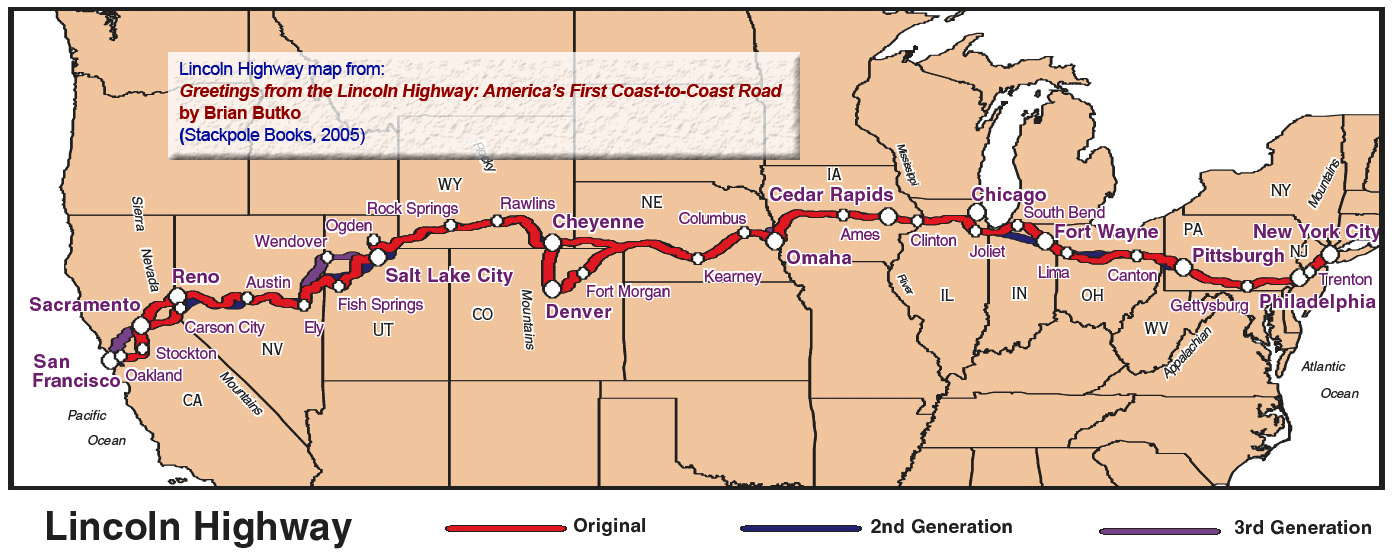
Alice was the first woman to drive across the US, following a route that a few years later would be used by the Lincoln Highway in many places (though notably not across the Allegheny Mountains through PA or OH). Emily hopes to follow Alice’s original route as closely as possible, but will deviate somewhat due to roadway changes and the safety concerns.

AliceMap

Learn more at their web site aliceramsey.org about the route, and about a film that Emily’s brother Bengt Anderson is producing about the event and women’s history, Alice’s Drive – Women Who Drove The Century. Richard also reports that the car body is finished and being painted, and that the engine needs only a few parts before being started, they hope in March. The most recent challenge was needing an exhaust manifold; not finding one, Richard modeled and cast one based one a 1908 Maxwell that he owns.